

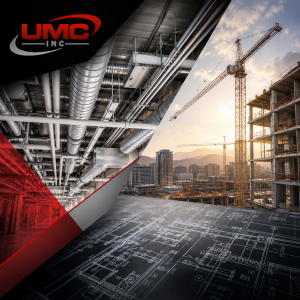
 A construction site is never standing still.
Materials arrive. Crews shift from one area to the next. Inspections are scheduled. Questions come up. Plans are adjusted. Progress depends on dozens of teams working in the right place, at the right time, with the right information.
For multifamily, apartment, hotel, and large-business projects, that movement is even more complex. One building can include hundreds of units, miles of piping, extensive ductwork, mechanical rooms, boilers, amenity spaces, underground work, equipment connections, and repeated layouts that must be completed with accuracy from floor to floor.
That kind of work does not happen by accident.
It takes coordination.
At UMC, Inc., coordination is more than a meeting on the calendar. It is a mindset that shapes how we plan, communicate, solve problems, and deliver turnkey plumbing and HVAC solutions across the West.
Coordination Starts Before Crews Arrive
The best work on a job site often begins long before tools are in hand.
For UMC, early coordination means reviewing plans, identifying potential conflicts, understanding the schedule, aligning with the general contractor, and preparing our teams for the work ahead. It means looking beyond our individual scope and asking how our work affects the full project.
Where will the biggest constraints appear?
Which areas need priority access?
How will plumbing and HVAC installation sequence with framing, electrical, fire protection, and finish work?
What materials need to be ready before a critical phase begins?
How can we help keep the job site moving safely and efficiently?
These questions help create clarity.
And clarity is one of the most valuable tools on any construction site.
When expectations are clear, crews can work with confidence. When information flows quickly, issues can be solved earlier. When each trade understands how their work connects to the next, the project is better positioned to stay on schedule.
The Systems Behind the Schedule
Plumbing and HVAC systems are often hidden when a building is complete, but during construction, they are central to the schedule.
Underground plumbing must be completed before slab work can move forward. Rough-in work must coordinate with framing and inspections. Ductwork must fit within tight ceiling spaces alongside other systems. Mechanical equipment must be placed with access, clearances, and future service in mind. Boiler rooms, water-heating systems, drains, vents, and equipment connections all require careful planning.
A small coordination miss can create a ripple effect.
A delayed install can hold up another trade. A routing issue can require rework. A material gap can slow progress in a high-priority area. A question left unanswered can become a constraint that affects the entire project.
UMC understands these pressures because we have spent more than 50 years working in large-scale construction. Our role is not just to install systems. Our role is to help protect project flow.
That means planning with purpose, communicating clearly, and taking ownership of the work from start to finish.
Why Repetition Requires Precision
In multiunit construction, repetition can be a major advantage.
When unit layouts repeat across floors or buildings, teams can build rhythm. Crews become familiar with the sequence. Materials can be planned more efficiently. Lessons learned in one area can improve performance in the next.
But repetition also raises the stakes.
If a mistake is repeated, it can become expensive quickly. One missed detail in a unit can lead to dozens of corrections across a project. One coordination issue may affect an entire stack or floor. One delay may multiply as crews move through the building.
That is why UMC focuses on getting the process right early.
A strong start creates better momentum. Clear standards help crews stay consistent. Field communication helps small issues get addressed before they become larger problems. Quality control throughout the project helps protect the final result.
In large-scale construction, precision is not just about craftsmanship. It is about consistency.
Technology Helps Teams Stay Connected
Modern construction moves quickly, and strong communication requires the right tools.
Digital forms, tailored reporting, project documentation, and field communication technologies help teams stay aligned. These tools make it easier to track progress, report updates, document conditions, and share important information with the people who need it.
At UMC, technology supports accountability.
It helps our office and field teams stay connected. It helps project leaders make informed decisions. It helps reduce confusion and improve visibility across complex jobs. It also gives our partners better insight into progress and potential constraints.
But technology is only effective when it is paired with experience.
A report is useful because it tells someone what to look for. A digital form matters because it supports a real process. A project update matters because it helps the team make better decisions.
The tool does not replace the team.
It strengthens the team.
Safety Depends on Planning
Safety is one of UMC’s core values, and coordination is a key part of safe work.
A well-coordinated job site is cleaner, more organized, and easier to navigate. Crews know where they need to be. Materials are staged with intention. High-traffic areas are managed more carefully. Work is sequenced to reduce unnecessary overlap and congestion.
This matters on every project, but it is especially important on large builds, where multiple trades often work in the same areas.
Planning supports safety by reducing uncertainty.
When teams understand the work, the sequence, and the expectations, they are better prepared to make safe decisions. When communication is strong, potential hazards can be identified and addressed earlier. When crews take ownership of their workspace, everyone benefits.
For UMC, safe work and quality work go hand in hand.
The Human Side of Coordination
Coordination is not just about schedules, drawings, forms, or meetings.
It is about people.
It takes project managers who communicate clearly. It takes foremen who understand the field. It takes crews who care about doing the work right. It takes general contractors, developers, engineers, inspectors, vendors, and trade partners working toward the same outcome.
At UMC, teamwork is one of our values because construction is never a solo effort.
We believe strong relationships lead to stronger projects. Honest communication builds trust. Follow-through creates confidence. Respect on the job site improves collaboration. When people are aligned, problems become easier to solve.
That is why we invest in our team through training, education, safety practices, benefits, and a culture that values growth. When employees feel supported, they are better equipped to support our customers.
Great coordination starts with great people.
Built for Communities Across the West
UMC began as a Utah company more than 50 years ago. Today, we continue to support large-scale new construction across Utah, Colorado, Idaho, and the West.
The communities we help build are changing skylines and creating spaces where people live, work, visit, and gather. Multifamily developments provide homes. Hotels support travel and hospitality. Large business projects create places for companies to serve customers and grow.
Behind each of those spaces are systems that need to perform.
That is where UMC brings experience, quality, and commitment.
Our vision is to lead the industry by providing clean, quality service for the communities we help build. That vision guides the way we approach every project, every partnership, and every detail.
Coordination Builds Confidence
At the end of a project, people see the finished building.
They may not see the coordination that helped it get there. They may not see the planning behind the walls, the communication between trades, the constraint management, the documentation, or the field adjustments that protected the schedule.
But they feel the result.
They feel it when the building functions the way it should. They feel it when rooms are comfortable, water is reliable, systems are accessible, and spaces are ready to serve the people inside.
That is the value of strong coordination.
It helps projects keep moving. It supports safety. It protects quality. It strengthens relationships. And it helps turn construction plans into completed communities.
At UMC, Inc., we are proud to be the plumbing and HVAC partner general contractors and developers can count on for large-scale new construction across the West.
Ready to build with a team that understands coordination from the ground up? Visit umc.us or call 801.254.4038 to start the conversation with UMC, Inc.